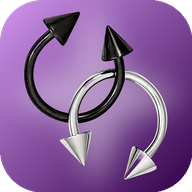
18g nostril screw (the standard)
Implant-grade titanium with a curled tail that anchors in the shallow interior space — the default for both healing and long-term wear.
A high nostril piercing sits noticeably above the classic nostril position, up along the nasal bridge side where the nose starts to slope. Worn alone or stacked with a standard nostril stud, it is the editorial, fashion-forward take on the nose piercing.
Reviewed and updated 2026-07-22
A high nostril piercing goes through the nostril well above the traditional crease placement — closer to the bridge, where the side wall of the nose is taller and tighter. The result reads less 'classic nose stud' and more deliberate design detail, especially in profile.
The tissue up there is different: denser, with less room to work on the inside of the nose. That cramped interior is why high nostrils are harder to pierce, harder to change, and stricter about jewelry than a standard nostril. It is a placement you go to a specialist for, marked precisely to flatter the slope of your specific nose.
High nostrils are popular as symmetric pairs — one high on each side — or stacked above an existing nostril piercing for a two-stud column. Both looks depend entirely on millimeter-level placement, so expect (and demand) an unhurried marking process.
High nostrils rate around 6 out of 10 — a notch above a standard nostril, because the needle passes through denser cartilage-adjacent tissue and the clamp-free working angle is awkward. Eyes water, you sneeze or want to, and then it is done.
Healing runs 3 to 6 months, longer than a classic nostril. The high placement is harder to clean from the inside, sits right where glasses and sunglasses rest their weight, and gets disturbed every time you blow your nose. Saline twice daily on the outside, patience on the inside, and blot — never wrench a tissue across your nose — during colds and allergy season.
Makeup deserves a mention: foundation and powder migrate into fresh high-nostril channels easily given the location. Keep a clean margin around the piercing until it has fully settled.
Here is the trade-off that defines this piercing: rings are effectively off the menu. The placement is too far from the nostril's edge for a hoop to wrap around — there is simply no path. High nostrils are a studs-only placement, permanently, and the interior is too tight for most L-bends and labret backs to seat comfortably.
The standard answer is an 18g nostril screw — a stud whose tail curls to hold itself in place within the shallow space. Changing one yourself, by feel, high inside your nose is genuinely difficult; most wearers have their piercer do swaps. If your dream nose look involves a hoop, get a classic nostril placement instead — this is exactly the decision previewing both on your own photo settles.
Small, secure, and self-retaining — the shortlist is short because the anatomy is strict.
Implant-grade titanium with a curled tail that anchors in the shallow interior space — the default for both healing and long-term wear.
1.5–2mm stones suit the high placement; anything larger overwhelms the narrow upper nostril wall and fights with glasses.
A 14k or titanium micro ball gives the piercing a beauty-mark quality — the most understated version of the look.
Identical studs for double high nostrils; even a small mismatch in stone size is conspicuous when the two sit at mirror height on your nose.
| Feature | High nostril | Classic nostril |
|---|---|---|
| Position | High on the nose's side wall, toward the bridge | At or just above the nostril crease |
| Pain | About 6/10 — denser tissue | About 5/10 |
| Healing | 3–6 months | 2–6 months, usually settling sooner |
| Jewelry | Studs only — hoops cannot reach the edge | Studs or hoops once healed |
| Changing jewelry | Difficult; usually piercer-assisted | Easy to DIY once healed |
Around 6/10 — slightly more than a classic nostril because the tissue high on the nose's side wall is denser and the working space inside is tight. It is over in a second; watering eyes and a sneeze reflex are the universal experience.
3 to 6 months. The placement is awkward to clean, takes glasses-pad pressure, and gets jostled every time you blow your nose, so it typically outlasts a standard nostril's healing timeline.
No — the placement sits too far from the nostril's edge for a ring to wrap around. High nostrils are studs-only for life, which is the single most important thing to accept before choosing this over a classic nostril.
Typically $40–$90 with an implant-grade titanium nostril screw. Pairs cost roughly double; choose a piercer who does high nostrils regularly, because the cramped interior placement is a skill test.
They can — the placement sits near where nose pads rest. Most glasses wearers heal fine, but expect to adjust how frames sit for the first months and mention your glasses habit at the marking stage so placement accounts for it.
It depends on the length and slope of your nose's side wall: longer noses carry stacks beautifully, shorter ones often look best with a single high stud. Previewing both options on a photo of your actual nose answers it before you book.
Piercing Types
When people say 'nose piercing' they almost always mean the nostril — a small stud or hoop through the curve of the nostril, and one of the most worn piercings on earth. It is subtle, endlessly customizable, and sits right in the middle of your face, which makes placement the whole game.
Piercing Types
The septum piercing sits in the thin wall between your nostrils and has gone from counterculture badge to mainstream staple — partly because it heals fast for a nose piercing, and partly because it is the only facial piercing you can genuinely hide in seconds.
Piercing Types
A nasallang is a single straight barbell that passes through one nostril, the septum, and out the other nostril — three layers of your nose, one bar. From the front it masquerades as two nostril studs; the truth is one of the most hardcore piercings in the nose family.
Piercings by Location
The nose offers six genuinely different piercings, from the everyday nostril stud to the engineering project that is a nasallang. This hub compares them all — pain, healing, visibility, and hideability — so you can find the one that fits your face and your life.
Piercings by Face Shape
Nose jewelry sits at the dead center of your face, which makes it the highest-leverage styling decision in piercing: a few millimeters of diameter change how your whole face reads. Same nostril piercing, different ring — completely different effect per face shape.
Virtual Try-On
A nose piercing sits in the middle of every photo you'll ever take, so guess wrong and you'll know it daily. PiercingAI renders studs and hoops on your actual nose before the needle decides for you.