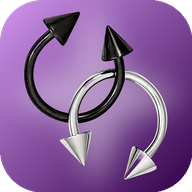
Curved barbell (the healing standard)
14g titanium with a slightly longer post to allow for swelling. Simple top and bottom balls, nothing that dangles or snags — this is the only sensible starter.
The belly button piercing — a curved barbell through the ridge of skin above the navel — is the definitive body piercing: low on pain, high on payoff, and back in full force with the return of crop tops and low-rise everything. The catch nobody mentions is the healing timeline.
Reviewed and updated 2026-07-22
A belly button (navel) piercing doesn't actually pierce the navel — it passes through the lip of skin on the upper rim, so the bottom ball of a curved barbell sits framed inside the navel itself. Lower-rim and floating-navel variations exist for different anatomies, which is exactly why a piercer needs to look at yours before promising anything.
Anatomy matters more here than for almost any surface-adjacent piercing: you need a defined lip of tissue with room front-to-back for the barbell. Some navels — especially very shallow ones or 'outies' — don't have a safe ridge to pierce, and a good piercer will say so and suggest a floating navel setup or dermals instead of forcing it.
It is a needle piercing done freehand or with a small clamp by a professional. The procedure is quick; the commitment is the year that follows.
Genuinely one of the milder piercings — around 4 out of 10 for most people. The rim of the navel is soft, quick-to-pierce tissue, and many people describe it as a firm pinch and pressure rather than sharp pain. If you handled your lobes fine, the needle part of this will not be your problem.
The real discomfort arrives afterward and it is mechanical: waistbands, high-rise jeans, seatbelts, sit-ups, and bending over all press exactly where your new piercing lives. For the first months, your wardrobe and your gym routine will negotiate with your navel daily — that friction, not the needle, is the true pain cost.
Belly buttons are famous slow healers: 6 to 12 months is normal, and flare-ups at month four after weeks of looking perfect are classic. The navel lives in a warm, creased, constantly-flexing spot under clothing — the exact opposite of ideal healing conditions — so patience is the whole strategy.
Protect the timeline: sterile saline twice a day, loose high-rise-free clothing when you can, no swimming pools or hot tubs early on, and no swapping in dangly jewelry before it is fully healed. If you're piercing with a beach summer in mind, count backwards — a navel pierced in autumn is comfortably settled by swimsuit season; one pierced in June spends the whole summer off-limits to lakes and pools.
Heal with a plain 14g implant-grade titanium curved barbell — the fun options come later.
14g titanium with a slightly longer post to allow for swelling. Simple top and bottom balls, nothing that dangles or snags — this is the only sensible starter.
The first upgrade once healed: a prong-set stone in the navel catches light without adding snag risk — the everyday driver for most healed navels.
Chains, drops, and charms — the classic 2000s look, fully back. Strictly for healed piercings: dangles lever against the channel with every step.
The decorative element sits above the navel instead of inside it — a subtler, jewelry-forward look that works especially well with high-waisted outfits.
| Feature | Belly button | Nipple |
|---|---|---|
| Pain | Around 4/10 — one of the gentler piercings | Around 7/10 — famously intense |
| Healing time | 6–12 months | 9–12 months |
| Standard jewelry | 14g curved barbell | 14g straight barbell |
| Daily friction | Waistbands and bending | Bras, shirts, and everything |
| Who sees it | Your call — crop top or covered | Private by default |
The piercer inspects your navel's rim standing and sitting — placement that looks straight lying down can sit crooked upright. Bring your AI preview to agree on the look.
A clamp or freehand grip steadies the rim, a hollow needle passes through in a second, and the curved barbell follows. Most people are surprised how easy it was.
Months of twice-daily saline, loose waistbands, no pools, and leaving it alone. Redness after friction is normal; persistent pain or discharge means see your piercer.
Once your piercer confirms it is healed — think next year, not next month — swap in gems, dangles, or a reverse barbell.
Around 4/10 — most people rank it among their easiest piercings. It is a quick pinch through soft tissue. The friction from waistbands during the months afterward is the genuinely annoying part, not the needle.
6 to 12 months, and it is famous for flaring up mid-heal after looking fine for weeks. Keep the starter barbell in, stay out of pools and hot tubs early on, and don't switch to dangly jewelry until a piercer confirms it is done.
Typically $30–$80 in the US including a basic implant-grade curved barbell. Given the long heal, quality titanium is non-negotiable — reactive metal in a navel means a year of irritation.
Yes, with adjustments: favor lower-friction, looser waistbands for the first months, and go easy on core work early — sit-ups and heavy bending crease exactly where the piercing sits. Athletes often tape a small breathable patch over it for contact sports.
Keep it out of pools, hot tubs, lakes, and the sea for at least the first month, and ideally until well into healing — soaking a fresh navel in shared water is the classic infection route. Planning a beach summer? Pierce it the autumn before.
It depends on your navel's anatomy — some rims take a barbell beautifully, some need a floating setup, a few shouldn't be pierced at all. A piercer answers the anatomy half; previewing jewelry on a photo of your own torso answers the style half before you ever book.
Piercing Types
A nipple piercing is a straight barbell through the base of the nipple — a piercing you choose for yourself, since most of the time only you know it's there. It is also one of the more painful piercings with one of the longest heals, so it rewards people who go in informed.
Piercing Types
A dermal piercing is a single-point piercing: a small anchor sits under the skin and only a decorative top shows, so a gem appears to float anywhere flat on your body — cheekbone, chest, collarbone, hip. No exit hole, no visible bar, and a few rules that are different from every other piercing.
Piercings by Location
A belly piercing doesn't actually go through your belly button — it passes through the lip of skin above (or below) it. That one anatomical fact explains the placement options, who's a good candidate, and why the heal takes most of a year. Here's the whole picture.
Piercings by Occasion
Piercings and beaches are a natural pair — belly rings were basically invented for swimwear — but only when the piercing is healed. Fresh piercings and ocean water do not mix, no matter what the salt-water myth says. Here is how to time it and style it.
Piercing Tools
The chart above lists the real healing window for every piercing. This guide covers what the numbers can't: the biology behind them, the trap that catches almost everyone at month two, and how to read what your piercing is telling you.
Piercing Quizzes
Six honest questions — pain tolerance, how long you can baby a healing piercing, what your job allows, your style, your budget, and how committed you are — matched against eight realistic first-choice piercings.